Resume guide · Software engineer
Writing a software engineer resume
Engineering managers skim for what you built, at what scale, and with which tools. Parsers need the same information as plain text under standard headings.
Free to use · No card · Your resume isn’t used for ads
Why it matters
Engineering resumes are often scanned for a language or framework first, then read for scope: what you built, how big it was and what changed because of it. A resume that’s only a technology list passes the first scan and fails the second; one with specific, plain-text bullets passes both.
Skills these job descriptions often ask for
Examples — match them to the actual job and include only what you can discuss.
- Languages and frameworks named in the job
- Databases, cloud platforms and infrastructure tooling
- Testing, CI/CD and code review practices
- System design and performance work
- Collaboration across product, design and other engineering teams
Bullet patterns
Fill the [brackets] with your own details.
- Built [feature / service] in [stack] used by [users / teams]; [effect]
- Reduced [latency / cost / errors] by [amount] by [change]
- Led migration of [system] from [old] to [new] with [outcome]
What reviewers look for
- Scope: users, traffic, data size or team size — whatever is true and relevant
- Ownership: what you designed or decided, not only what you implemented
- Quality: testing, reliability and performance work, with before/after numbers you can explain
- The languages and frameworks in the job, shown in the bullets where you used them
Common mistakes
- Skill bars, logos or two-column layouts that parsers read out of order
- Listing every technology you’ve touched; interviewers pick the least familiar one
- Team achievements written as if they were yours alone
Template
Technical groups skills (languages, tools, methods) and shows dates in a monospace column; Minimal is a quieter alternative.
Who it’s for
- Developers applying to their next role
- Graduates and bootcamp alumni with projects to show
- Engineers moving between front-end, back-end, data or infrastructure work
Templates that fit
All 12 templates →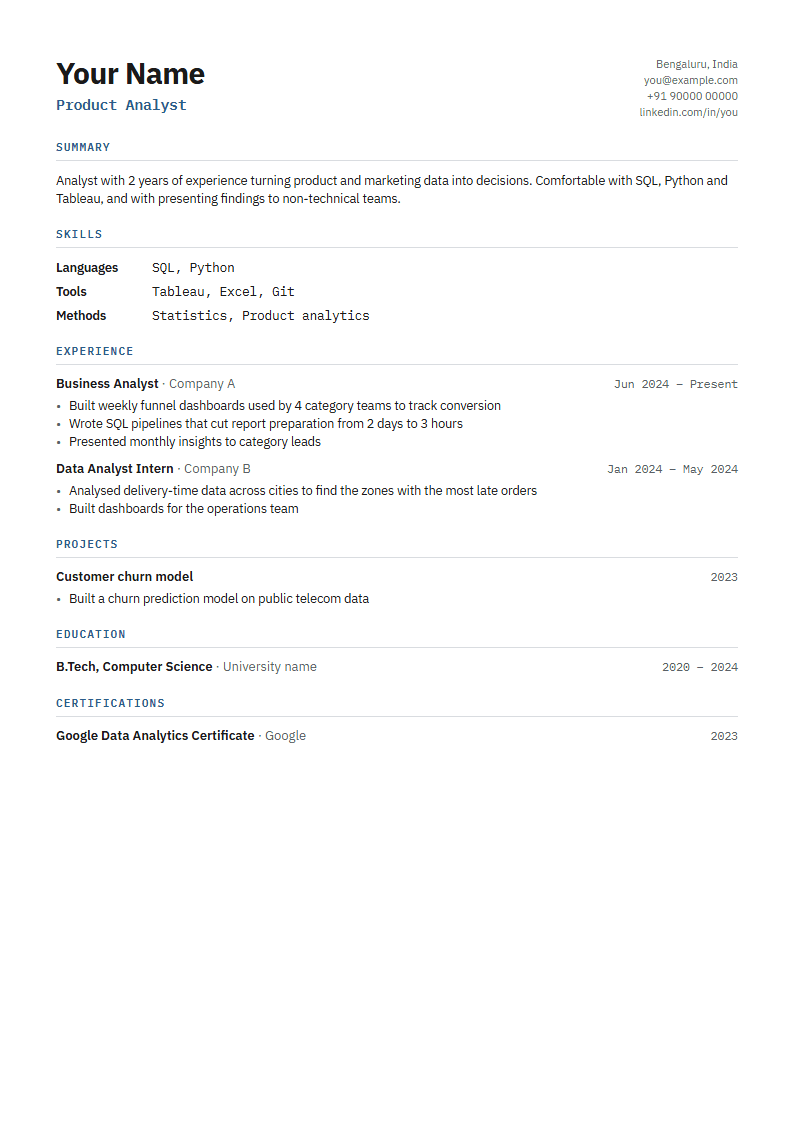
Technical
Engineering and data
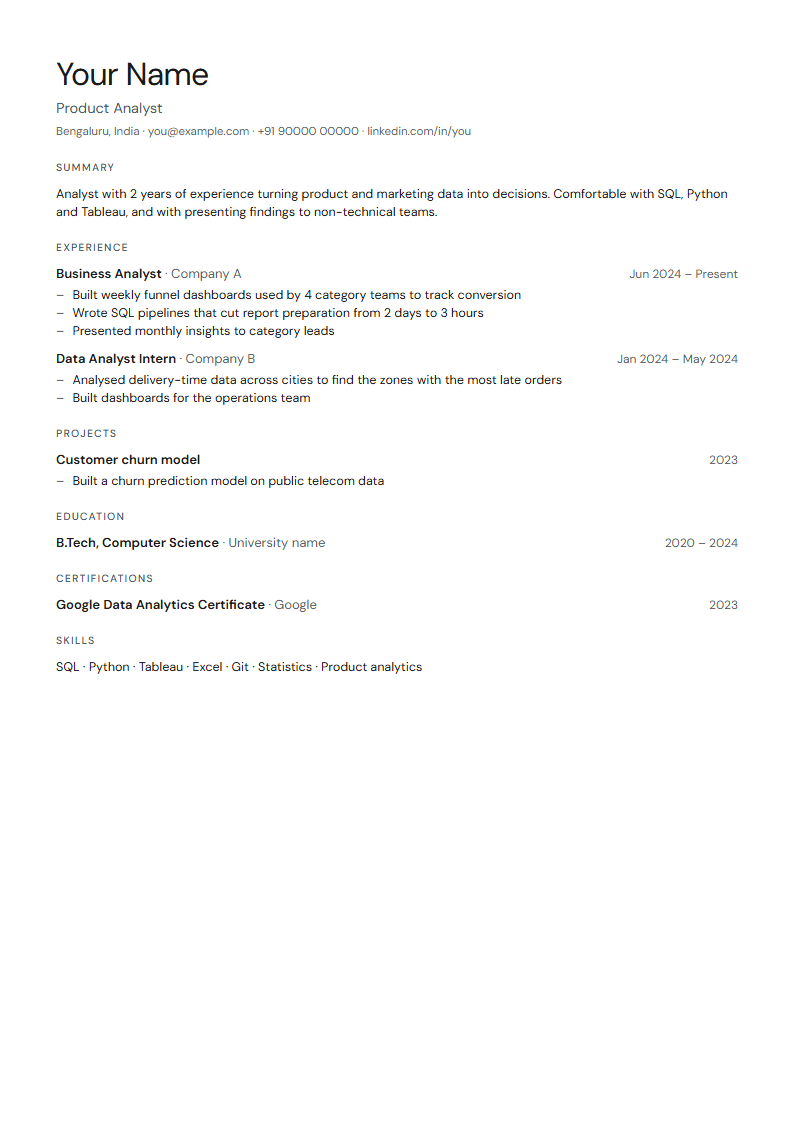
Minimal
Quiet, lots of air
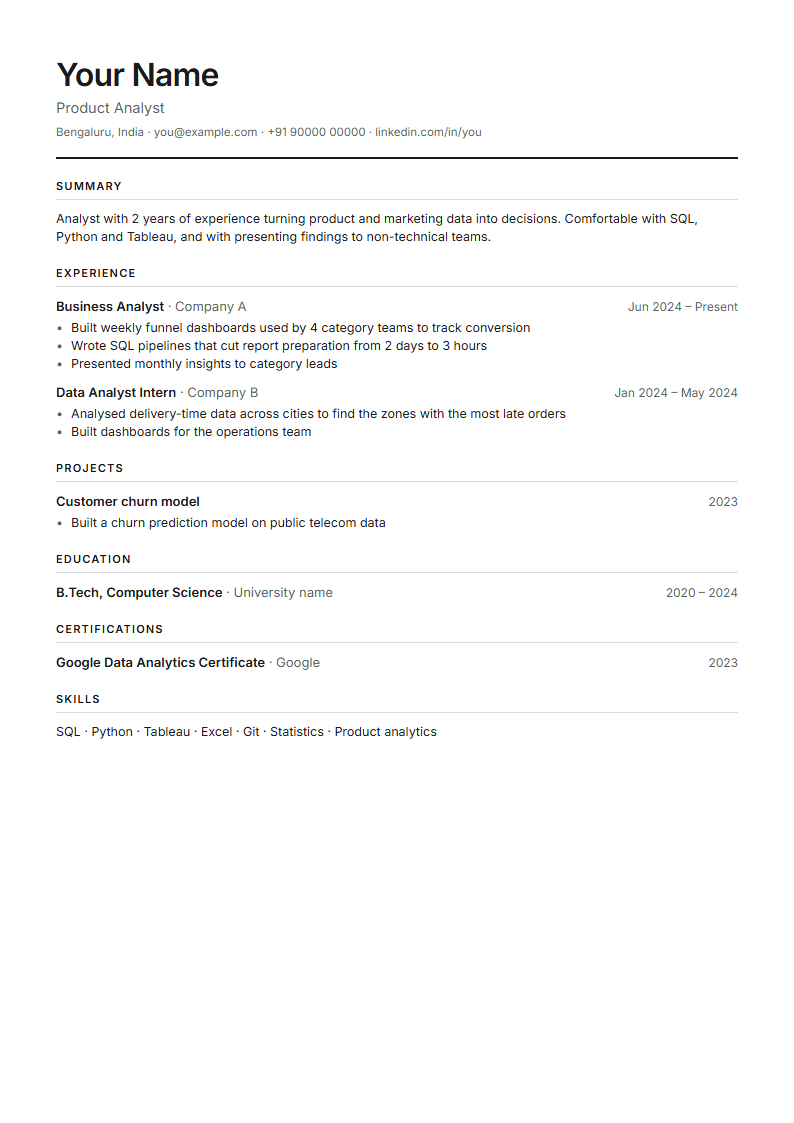
Classic
Safe for any role
Why Ergent
- AI that sticks to your factsRewrites and letters work from your resume. Claims it can’t find there are flagged, and missing details become [prompts] for you — not invented numbers.
- Scores that explain themselvesEvery score comes with the reasons, the parsed text and ranked fixes. No percentiles or “better than 87% of applicants”.
- Specific to each jobPaste the job description and the check, the tailoring, the letter and the interview questions are all written for that job.
- Interview practice from your own resumeQuestions come from the job and your experience, and feedback points to what you could have mentioned from your resume.
- One workspace, start to finishResume versions, job descriptions, letters, applications and interview prep stay connected, so you don’t paste the same things five times.
Questions
- How long should an engineering resume be?
- One page for most people with under 7–8 years of experience; two if you have more relevant work than fits. The Compact template helps fit more on a page without shrinking the text too far.
- Should I link my GitHub?
- Yes, if it shows work you’d be happy to discuss. Put it with your contact details as plain text so parsers keep it.
- Will this guarantee my resume passes every ATS?
- No tool can promise that — companies use different systems and set them up differently. Ergent checks the things most parsers rely on (readable text, standard headings, contact details, dates, the job’s keywords) and shows you exactly what it read, so you can fix what’s in your control.
Build my resume
Free, in your browser. Know someone job hunting? Send them this page.
How your data is used and deletedWhat AI can and can’t promiseRefundsContact